

Feline Upper Respiratory Infections in Shelter Settings
- Key Takeaways
- Recognising URI: Clinical Signs
- What Causes URI?
- Diagnostic Testing
- Understanding PCR Results: Important Caveats
- Treatment
- Prevention and Management: Reducing URI in your facility
- The Bottom Line
- Redaction
- References

This article is written based on our experience in shelter medicine and current veterinary literature. No generative AI was used to write or edit this article.
Feline Upper Respiratory Infections in Shelter Settings: What Actually Works
-
Key Takeaways
Feline upper respiratory infections acquired in shelters are preventable
The most effective tools are minimising how long cats stay in the shelter, reducing stress, and providing housing that meets or exceeds the recommendations in published guidelines.Diagnostic tests have limitations
They are typically only recommended in outbreak situations. They should always be interpreted alongside what cats look like clinically and patterns of disease in the facility.In an outbreak or a shelter with endemic disease, treatment alone will not solve the problem
Shelters need to identify a cause and address the root issues contributing to cats becoming ill. This approach is the only way to reliably stop any outbreak and lower the chance that it will happen again in the future.Feline upper respiratory infection (URI) is one of the most common health challenges in animal shelters, but it doesn’t have to be! In a well-managed shelter that isn’t crowded, cats should rarely get sick with URI while in care.
The most effective way to reduce URI is to tackle the main risk factors: Stress, inadequate housing, and gaps in population management, such as crowding, long shelter stays, and inefficient movement of animals through the system.
-
Recognising URI: Clinical Signs
Signs of URI include sneezing, watery or yellow/green discharge from the nose and eyes, squinting, conjunctivitis, coughing, fever, and loss of appetite.
Vaccination should be part of every shelter’s intake protocol. 1, 2The standard cat vaccine given at intake (Modified-live feline viral rhinotracheitis-calicivirus-panleukopenia; or MLV-FVRCP vaccines) does not fully prevent infection with the viruses that cause URI. However, it can reduce severity, shorten illness, and reduce viral shedding.
-
What Causes URI?
Feline URI can be caused by one or more viruses and bacteria. During an outbreak, we look at clinical signs, timeline and patterns of illness, how the disease is spreading between cats, and how cats are responding to treatment. Together, these help us narrow down the likely cause.
Viral causes of URI are the most common culprits in shelters, and include Feline Herpesvirus (FHV-1) and Feline Calicivirus (FCV). Common bacterial causes involve Mycoplasma spp., Chlamydia felis, and Bordetella bronchiseptica. Opportunistic bacteria such as Staphylococcus and Streptococcus spp. can worsen disease in cats that are already weakened by other infections or conditions.
Here are some important things to know about these pathogens:
FHV-1
It’s estimated that 50-97% of cats worldwide have FHV-1. 3After the initial infection, the virus lies dormant in most cats but can reactivate during times of stress, such as when a cat enters a shelter.FCV
Can cause a wide range of clinical signs depending on the strain, from mild upper respiratory signs and oral ulcers to a severe, life-threatening form that causes multiple organ failure. In our experience, FCV is the only pathogen that typically causes outbreaks even when housing and management practices are adequate.Mycoplasma spp.
More often found in sanctuary cats or cats that have been in the shelter for a long time,and can also be present in healthy cats. 4Chlamydia felis
Spreads only through direct contact and does not survive well in the environment. It is most important in kittens, and often linked to gaps in husbandry and sanitation practices.Bordetella bronchiseptica
The only organism that can also affect other species, such as dogs, rabbits, and guinea pigs. It is also often linked to gaps in husbandry practices. -

Diagnostic Testing
When is testing recommended?
URI treatment tends to be similar regardless of the causative pathogen. For this reason, we do not recommend routine testing every shelter cat with URI. When testing is needed, the preferred test is polymerase chain reaction (PCR) testing, which uses swabs from the eyelid membranes and back of the mouth to look for the presence of viruses and bacteria.
We recommend PCR testing in the following situations:
- URI is well-established in the facility (“endemic”) or actively spreading between cats. The ideal goal is zero cases of URI acquired while in care, so any ongoing or spreading disease is worth investigating.
- Clinical signs are unusually severe, including any case where cats are dying.
- Cats are not getting better with treatment.
- Test results are needed for research or legal documentation in a cruelty case (an unusually high level of URI is a common finding in almost every cat hoarding case).
If multiple cats are affected, test a subset of cats: Typically 10 to 30% of the population and at least 5 to 10 cats. Focus on cats in the early stages of illness and before antibiotic treatment has started, when the pathogen is most likely to be detected.
We strongly recommend post-mortem examinations for any cats that have died or been euthanised before a clear diagnosis was established.
-
Understanding PCR Results: Important Caveats
PCR results must be interpreted carefully, because they don’t always identify a clear causative agent, especially if only one or two cats are sampled. To identify the cause of an outbreak and to plan a response, we look at test results from multiple cats, alongside clinical signs and disease patterns.
False negatives, meaning the test misses an actual infection, can happen when pathogen levels are too low to detect, due to sampling or lab issues, or if the causative agent is not included in the testing panel. For example, false negatives can occur if samples are taken too late in the course of infection or samples are taken after antibiotic therapy.
Positive results can also be difficult to interpret. Many healthy cats carry pathogens like FHV-1 and Mycoplasma spp. without being sick, and tests for viral pathogens can be positive due to a recent vaccine, so a positive result doesn’t automatically mean that the pathogen is causing the problem.
-
Treatment
Most cats with URI will get better with supportive care alone, such as offering different types of warmed wet foods and giving medications for pain, congestion, and nausea as needed.
Antibiotics should only be used as directed by the attending veterinarian.
According to the 2017 International Society for Companion Animal Infectious Illness (ISCAID) guidelines for the treatment of respiratory tract disease in dogs and cats,
antibiotics are only needed when there is clear reason to suspect bacterial infection, such as thick green/yellow nasal discharge alongside fever, loss of appetite, or lethargy. 5We also use antibiotics when there is a confirmed bacterial cause.If antibiotics are needed, shelter medicine experts recommend doxycycline as the first-choice option. Doxycycline works well against most cases of Mycoplasma felis, Bordetella bronchiseptica, and Chlamydia felis. Amoxicillin-clavulanate and Convenia have limited or no effect on some of these pathogens, and should not be used as first-line medications. We have seen many lingering individual cases and even shelter outbreaks from inappropriate use of these antibiotics in shelter and rescue cats with URI.
-
Prevention and Management: Reducing URI in your facility
Reducing Length of Stay
A longer stay in the shelter, especially if longer than 10-14 days, is one of the biggest risk factors for URI. Longer stays mean more crowding, more stress for cats and staff, and higher risk of disease spreading, creating a cycle that’s hard to break. Shelters should move cats through as efficiently as possible by identifying bottlenecks and removing barriers to adoption.
Example: During a URI outbreak, the best option for cats that have recovered, or those that have mild, stable URI signs, is to adopt them out quickly with a waiver and clear aftercare instructions for the new owner, rather than holding them in the shelter until they recover. This helps the individual cat, reduces the shelter population, and frees up space and staff to care for the cats that need it most.
Staying within Capacity for Care
Shelters should regularly assess whether their animal population is within what their staffing and housing can realistically and humanely support, and schedule or divert new intakes accordingly—especially in an outbreak.
The ASV Guidelines and UC Davis Koret Shelter Medicine Program provide useful frameworks for assessing an organisation’s capacity. 1,6Example: During a shelter-wide FCV outbreak, we would recommend temporarily pausing or delaying non-emergency intakes and redirect surrendered cats to partner rescues or nearby shelters. The shelter can then set up a separate area and dedicated staff and supplies for newly admitted cats, so that incoming animals do not cross paths with sick or exposed cats.
Reducing Stress and Housing Design
Key strategies for reducing stress and providing good quality housing include:
- Housing cats in enclosures that meet all the Association of Shelter Veterinarians’ guideline standards:
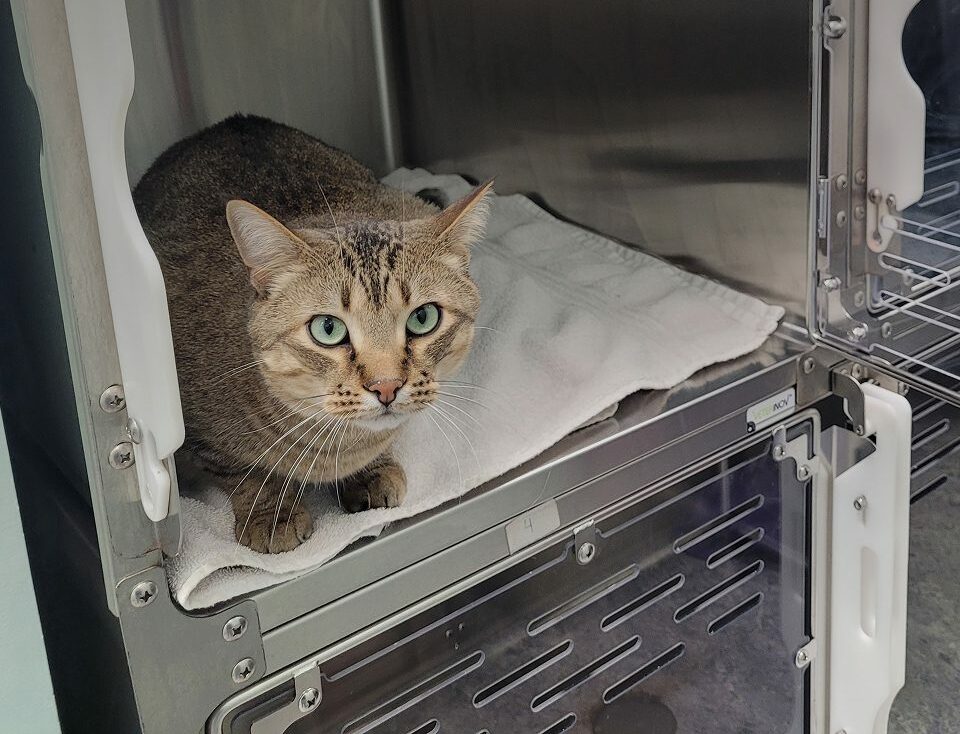
Cages (double compartment), runs, or rooms measuring ≥11 square feet. Smaller housing has been linked to higher rates of illness. 1- Well-ventilated through a grated front that allows social interaction
- Adequate separation between food, litter, and bedding.
- Minimizing cat cages that face each other, and spacing those that do at least four feet apart to reduce both stress and disease transmission.
- Elevating cat cage banks 18 inches off the floor.
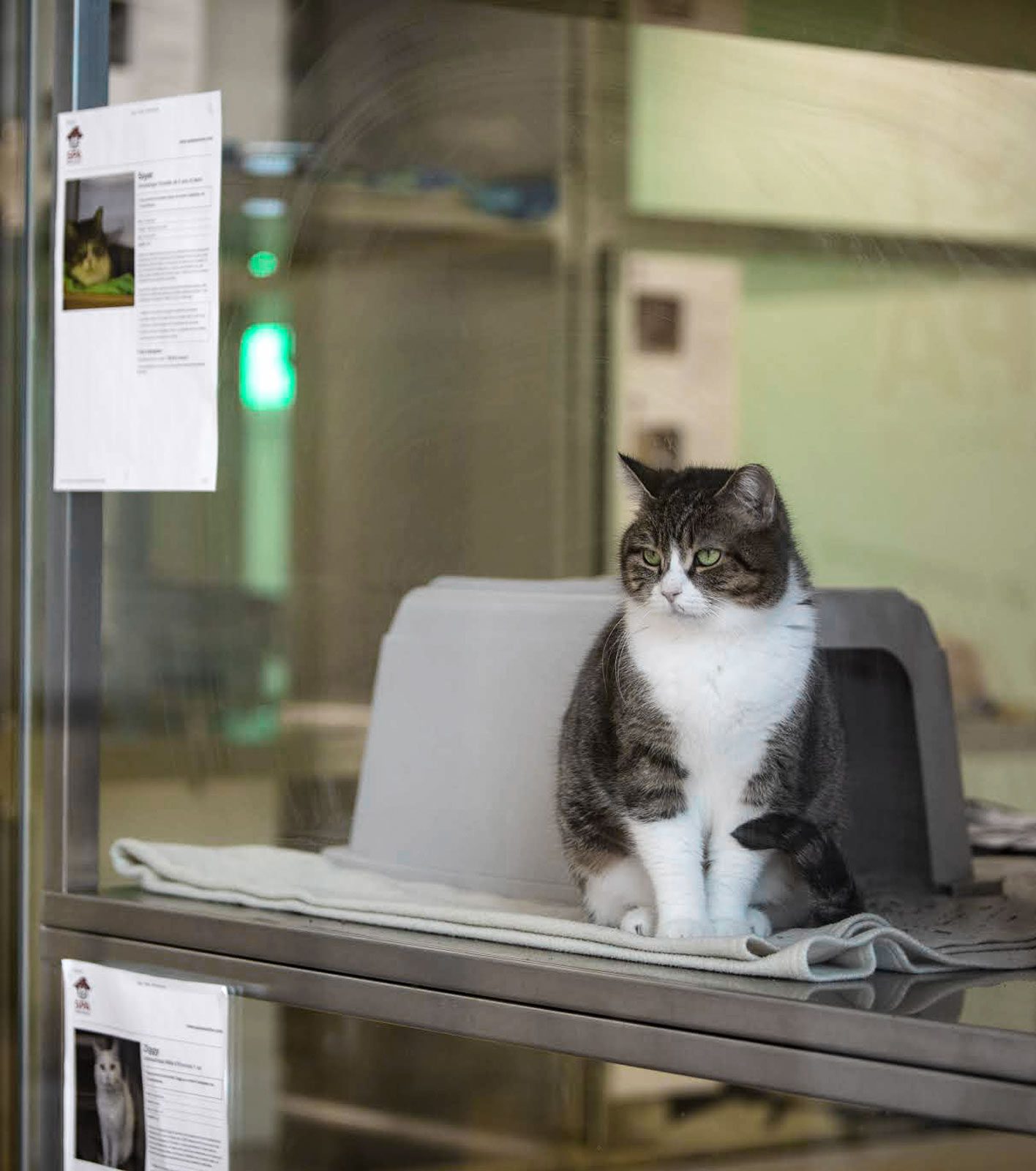
- Giving cats a place to hide and feel safe, such as a cat den, cardboard box, or a towel draped over part of the cage.
- Housing cats well away from the sounds, smell, or sight of dogs.
- Keeping noise and disruptions to a minimum, and avoiding unnecessary moves between cages.
- Providing enrichment and behaviour support suited to each individual cat.
- Sticking to low-stress, fear-free handling techniques at all times.
Understanding and Stopping Transmission
URI pathogens can be spread through direct contact, contaminated surfaces or objects (fomites), or respiratory droplets. Droplets from a cat’s sneeze are thought to travel only 3-4 feet. Unlike in dogs, airborne transmission over longer distances is extremely unlikely.
Except in the event of an FCV outbreak, cats with mild URI signs can usually stay in their current cage to avoid stressful disruptions.
However, staff and volunteers should follow a clear protocol: handling affected cats after all other cats in the room, wearing gloves and a gown, and washing hands according to Centers for Disease Control and Prevention (CDC) recommendations after removing protective equipment. 7Disinfection
Many common disinfectants, including alcohol-based hand sanitisers, do not reliably kill FCV. We recommend accelerated hydrogen peroxide products as the primary disinfectant in shelters. These need to be used at the correct dilution and left on cleaned surfaces for a certain amount of time to be effective.
During a cat’s stay in the shelter, daily tidying and spot cleaning are enough. The entire cage does not need to be emptied and sanitised each day, even during a URI outbreak.
Common Management Errors
It’s important for shelters to understand that while cleaning, vaccination, and appropriate treatment are important, none of these will fix a URI outbreak. Common errors we see include intense, unnecessary daily cleaning of every cage (which just stresses cats more) and overreliance on vaccines and antibiotics while management factors go unaddressed.
URI is mainly a disease of suboptimal housing and population management, and should always be considered as such!
- Housing cats in enclosures that meet all the Association of Shelter Veterinarians’ guideline standards:
-
The Bottom Line
Upper respiratory infections don’t need to be an accepted part of shelter life. With thoughtful population management, good housing, and a calm environment, shelters can dramatically reduce how often and how severely cats get sick while in care. The result is better welfare for individual cats, a more manageable workload for staff, and a shelter where cats can stay healthy and happy while they wait for their new homes.
-
Redaction
Dr. Wesley Cheung, BVSc, DABVP (Shelter Medicine Practice)
Dr. Emilia Wong Gordon, DVM, DABVP (Shelter Medicine Practice) -
References
- The Association of Shelter Veterinarians. The guidelines for standards of care in animal shelters: Second edition. J Shelter Med Community Anim Health. 2022;1(2):1-76.
- Jas D, Frances-Duvert V, Vernes D, Guigal PM, Poulet H. Three-year duration of immunity for feline herpesvirus and calicivirus evaluated in a controlled vaccination-challenge laboratory trial. Veterinary Microbiology. 2015;177:123-131.
- Miller L, Hurley K, eds. Infectious Disease Management in Animal Shelters. 2nd ed. Ames, IA: Wiley-Blackwell; 2021.
- McManus CM, Levy JK, Andersen LA, McGorray SP, Leutenegger CM, Gray LK, Hilligas J, Tucker SJ. Prevalence of upper respiratory pathogens in four management models for unowned cats in the Southeast United States. Veterinary Journal. 2014;201(2):196-201.
- Lappin MR, Elston T, Litster A, et al. 2017 ISCAID guidelines for the treatment of respiratory tract disease in dogs and cats. J Vet Intern Med. 2017;31(2):279-294.
- Koret Shelter Medicine Program. Shelter Operations/Capacity for Care Resources. University of California, Davis School of Veterinary Medicine. Updated October 9, 2025. Available at: https://www.sheltermedicine.com/library-resources/capacity-for-care-c4c-resources/
resources/ - Centers for Disease Control and Prevention. Hand Washing for Healthcare Workers. May 10, 2024. U.S. Department of Health and Human Services. Available at:
https://www.cdc.gov/ebola/media/pdfs/2024/05/hand-washing-for-healthcare-workers.pdf.